Thursday, November 19, 2015

An open letter to my doctor {what I'll probably never say}

My neurologist is a jerk. He's a great doctor in that he "knows his stuff" and is very well-educated about various neuromuscular diseases, but he wouldn't know bedside manners if they punched him in the face. I dread going to see him because I know how I'm going to feel each time I leave his office, but I haven't been able to find an alternative... yet. In the interests of pre-appointment therapy, here's what I would tell him if I was just a little bit braver.

Dear Doctor L. -

The first words you ever said to me were "Why are you here?"

Maybe we should back up, though. The first words you ever said in my presence were "Have the wheelchair sit by the computer." The snapchat I sent 30 seconds later pretty well covers my feelings about that one, so we'll move on.

Back to "Why are you here?"

I was there because I have two of the conditions that you claim as your specialties. I told you as much, and your response, still without so much as looking up from the computer screen, was "Well, you were diagnosed with Charcot-Marie-Tooth twenty years ago, so you know it's incurable. We can't help you."

I'll admit, I probably looked shocked, but it wasn't because I didn't already know that you couldn't fix my body. I had been told only two months earlier that I would be better off living with a broken hip for the rest of my life than going through the surgery to repair it - I was painfully familiar with the thought that I was never going to get better.

Rather, I was new to the concept that maybe someone with a serious, degenerative neurological disorder didn't need to be under the care of a neurologist. For a moment, I felt kind of silly. What was the point in going to a doctor, when I couldn't be healed? I had decided years ago that I no longer wanted the drugs you had to offer for the pain, and I wasn't in immediate need of any surgeries. Why was I there? 

I don't remember what I said. I do remember that you sighed and looked at me for the first time since we'd met. Not in the eye, but at my hands. "Well, I guess I can check your strength and reflexes. I'll put them in your file. Then if you ever have a slipped disc or something else I can fix, we can get you in more quickly."

In the end, I left your office that day with a prescription for physical therapy ("good for a year, if you ever want to do it, but it probably won't help") and an updated education on the latest research into neuromuscular disease. Despite your attitude, it was a productive appointment - I learned how much my condition had degenerated in the past few years, and after some prodding, you gave a few suggestions on how to manage the symptoms.

What I want you to understand is this: That's all I wanted. As someone with a severe and incurable disease, I don't go to my doctors expecting to be fixed.

I know you didn't start out in this career to spend your days talking to patients who you can't heal. Like most doctors, you probably set out with the goal of solving problems and fixing what's broken. For most patients, that's what's required of you. For some of us, though - the chronically and incurably ill - we don't need you to heal.

Instead of going to doctors in search of healing, we go to you for help living with the bodies we have right now. Our goals in life are different, and your job is to first learn what they are. Sometimes we may need you to prescribe a pill, straighten a spine, or do something we don't quite understand with our muscles and tendons, but sometimes we come to you just to make sure what's happening to our bodies is still in the realm of "normal" for our disease. Sometimes when I'm falling almost every week and even the simple act of bathing seems as risky as walking down High Street the night of a major football victory, I go to you, not in hopes of a miracle drug to make me never fall again, but for help finding a way to live as safely and independently as I can with this body I've been given. 

Life with this body of mine is hard. It means aching muscles, stinging nerves, twisted bones, and too many tears. It's brought me long days in bed, hours on the floor, and awkwardly asking small children to help me with the simplest of tasks. What you might not see is the good it's brought into my life. My sense of humor as I learn to laugh when I fall in the middle of the street, my slowly growing humility as I meekly ask friends and strangers alike for help, the instinctive trust I gain from people who might otherwise never enrich my life with their stories, my ability to adapt to a life of opening doors with my feet while going through them with my hands. My life is wonderful, and although I would happily give up all of the pain in the present and fear of the future, I would hesitate to trade even one of the things I've gained from living with this disease.

It's okay, Doctor, that you can't make me better. All I would ask of you is that you recognize the humanity behind the unsolvable problem. I, the incurable patient, "the wheelchair," am a person. I'm more than the sum of my twisted toes, hopeless hips, and crooked spine. The next time I come to you - and I will be back, frustrating as it may be for us both - I hope you find yourself able to see me.

And if you'd like to talk to me about nerve damage in mice, I'm totally up for doing that again. That was pretty cool.

Love (no, really),
Heather

My life is pretty great. For real. 

Tuesday, October 6, 2015

October Testimony.

Recently I came across something that I wrote a year ago this weekend. The year and especially month leading up to that were difficult, to say the least. I know that last October I didn't believe life was ever going to get better, and in some very shallow ways I was right. I'm always going to have certain trials. That's life. The bad things don't always go away.

I chose to keep going that conference weekend because I received a priesthood blessing that gave me a little bit of hope. I didn't plan to ask for one, but I got so sick I had to. (What else is new...) It reminded me of Christ's love and that He knows everything I'm experiencing. Not just the physical stuff, but how I feel about all of it as well - my sadness, my fears, somehow even my bitterness and loss of faith. I can't comprehend HOW he can understand all of that when it's a result of my imperfect way of thinking and he is perfect, but I know that he does.

I definitely didn't understand what that meant for me a year ago, and I know I still don't fully get it. But I was reminded during that weekend and I understand more every day that the atonement is real! Life is hard. It has to be. Heavenly Father loves us and his greatest desire is to see us return to his presence better and stronger than when we left. We're all stained by this world, but we're not in it alone. Christ has endured all of those same wounds, and he has the power to help us heal.

I'm a slow learner. I've been grateful for the gospel for all the time I've known about it, but only in the past year have I really begun to deeply understand it. I'm so glad to have had this year to learn, and I'm grateful for the pain and trials that have helped in that process.

Life is amazing, even when it kind of sucks. :)

Saturday, October 3, 2015

Disabled Life is Still Life {advice to 16-year-old me}

If I could tell my 16-year-old self anything at all, the first thing I would say wouldn't be about Christ or relationships or bad habits. 16-year-old me wouldn't listen to that stuff anyway. 

Instead, it would be, "Stop worrying so much about trying to do everything just the way able-bodied people do it. You can live successfully in the real world with your malfunctioning body, no matter what your family or the school counselors say. The 'real world' does make accommodations for disabilities, and you can do what anyone else can do, on wheels and in a quiet room with the lights dimmed." 

And then I'd probably finish up with "But don't major in education, because teaching middle school is maybe the one exception." 

For real, I listened to the voices saying that you have to be physically normal to be successful or happy for way too long.

Friday, September 25, 2015

Learning to Rely on Christ {an excerpt from my journal}

"[...] I want to do it all on my own, but, well, I can't get myself back to Heaven any more than I can get myself up off the floor when I fall.

For a few months this winter, I fell a lot. The combination of an irreparably broken hip, dizzy spells so bad I would forget which way was up, and general muscle weakness will do that to you.

Every time I fell, I eventually had to ask someone to come and pick me up.

I could crawl around my apartment living life at six inches above the ground for hours, and I sometimes did, but I had no power whatsoever to pick myself up off the floor.

I wished I could. I tried, with lots of giggle-worthy results but no success. I watched all the videos on how to get up after a fall, I came up with all sorts of ways to pull myself up -- it wasn't happening. In fact, the only result of all my effort was more time spent on the floor, sometimes with additional injury.

I am, very literally, incapable of redeeming myself from a fall.

Luckily for me, Heavenly Father saw fit to provide me with a "savior" (or twelve). Each time I fell, whenever I was ready to ask for help (or at least accept it when it showed up without my asking), there was someone willing to come and pick me up.

Elder Hurst had plenty of scriptural references for my troubles.
Sometimes, when I was actually hurt or it was 3 AM, it was an ambulance crew. Most of the time, it was missionaries: wonderful young men who not only picked me up, but made me feel like less of a failure as a human being while doing it.

No matter what, when I was ready to admit that I couldn't pick myself up and let someone help, someone was there. 

No matter how many times I fell, they kept coming. No matter how discouraged I got, no matter how worthless I felt, no matter how long I sat on the floor feeling embarrassed before I asked for help, they came. (And more often than not, they came with a reminder -- "Don't be embarrassed.")

Relying on Christ to redeem me from my spiritual fall is just as hard as relying on other people to pick me up off the floor. Admitting to myself that I can't do it all is hard. Whether it's the 1,000th time I've committed the same stupid sin, something terrible that another person does to me, a sucky thing that happens just because we live in a broken world, or my anxious little heart letting me feel despair... Christ is always there to pick me up. I don't even have to ask. All I have to do is open the door."

--


I'm eternally grateful to these men (and others) for not only cheerfully coming again and again to pick me up, but for pointing me to the Savior who can lift me out of far worse situations. 

Monday, September 21, 2015

Symptoms & Shiz: Charcot-Marie-Tooth Awareness, Part 2

There are a whole bunch of different possible symptoms of Charcot-Marie-Tooth.

If one of us went down, so did the other. #unity

Some of the most common early symptoms, often appearing in people who don't even know they have the disease, include
  • Foot weakness and numbness 
  • Foot deformities such as high arches and claw toes
  • Muscle loss in the lower legs
  • Balance problems
  • "Foot drop" (difficulty lifting the front of the foot)
  • Reduced reflexes 

I've had all of those symptoms for as long as I can remember. From a very early age - before I started preschool - I began wearing leg braces called AFO's to support my legs and ankles while I walked, prevent tripping due to foot drop, and slow the development of deformities in my feet.

Not pictured: I had tie-dye braces in middle school. I was the coolest.

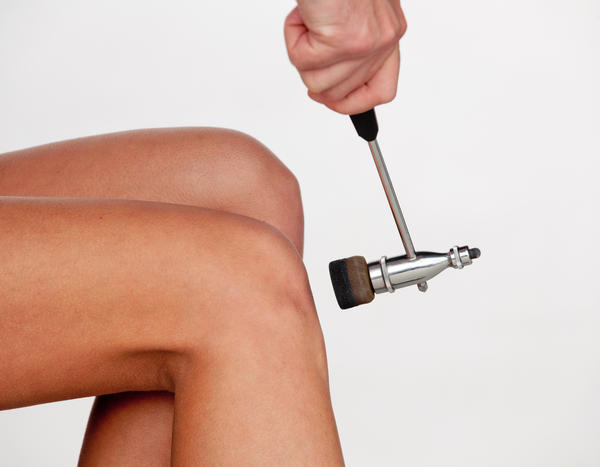
 Just a few months ago, I learned that not everybody is subject to this test every time they go to the doctor. I'm still convinced it's pretty common, but for anyone who doesn't know, it's called a reflex test, and it involves a medical professional hitting your joints (usually knees, elbows, and ankles) with a little hammer-like tool to check your reflexes. I fail this one pretty hard, but they persist in doing it every single time. Optimists? Sadists? I'll never know.

On a related note, one test I haven't always failed is the one where they ask me to squeeze their fingers as hard as I can. Especially if it was after the reflex test, I used to have one heck of a grip.

If you kick them, you're good.

Two of the other main symptoms I had as a young child were hip dysplasia and scoliosis. These symptoms are mostly seen in people with "severe" CMT, which is definitely me. Neither of these were discovered by doctors until I was ten, but they were probably there all along.


How that discovery was announced to me:
Doctor, reading my x-ray: Oh my god, look at that spine!
Other doctor: Forget the spine, look at those hips!
Smooth

Throughout middle school, I had a series of surgeries to put pins and rods in my hips and spine. Plus two extra surgeries to fix mistakes the surgeon made, but that's another story. The end result of those surgeries was that I was going to be in a wheelchair for the rest of my life. That was bound to happen either way, but I reserve the right to be a little bit bitter about how it went down.

Middle school: The BEST time to become dependent on a wheelchair. ;)

In high school, I needed another surgery to help with the deformities in my ankles and feet. It was called a "triple tendon transfer," and it gifted me with flat, rectangular feet, rather than the high arches typical of CMT. I was offered the option of an additional surgery to correct my hammer toes, but I opted out. (Click this link to find out why. Maybe not while eating. Ain't no straight toes worth that, thank you.)

All of those same deformities eventually occur in the hands and arms as the disease progresses. So far, I just have muscle weakness and a barely-noticeable (please don't tell me otherwise) deformity in my wrists. Basically, I can no longer open jars, reliably pick up small objects, or squeeze my doctor's fingers to the point of breaking, and my hands get tired pretty easily when I write by hand. (I can still type just fine, thank goodness.)

He appears to be making more progress with that than I ever could.

Some of the other symptoms I have include tremors; constant burning and tingling nerve pain in my fingers, feet, and legs; lessened ability to detect and adjust to temperature changes; constantly cold feet and hands; dry skin; hair thinning in affected areas (which does not yet mean no shaving my legs, sadly, but I have hope); a lessened sense of touch in my fingertips; foot numbness; difficulty breathing due to a weakened diaphragm; and partial hearing loss.

I have to check my feet and legs often for injuries, because I don't always notice when I'm hurt. Injuries that do occur heal very, very slowly or not at all - I've had a bruise on one of my toes since October, and a bug bite I got on my foot in July seems to be a permanent scar.

Overall, the symptoms of Charcot-Marie-Tooth are a pretty huge part of my life. People tend to frown on saying that an illness defines you, and there are definitely other more important factors in my life, but having this disease has had a major role in shaping who I am. How could it not?


These two awesome videos show the lighter side to living with CMT. Highly recommend.