A couple of days late, but after a year without blogging I think a couple of days late is better than nothing.
Friendships with people who support me in being the best and most authentic version of myself
My patriarchal blessing and the dozens of priesthood blessings I've received
Being able to spend holidays visiting my parents and grandmother
21 years of holiday memories with both of my grandmothers together (in-law unity)
Rest areas with wheelchair accessible bathrooms
Serving with a Relief Society president who's taken the time to learn what foods don't make me sick
AmeriCorps VISTA
Coworkers who become friends, even temporarily
The ability to use my time in mortality to love and help others, especially as a CASA and LWB volunteer
Parents who taught me how to serve
My home hospital bed, RoboChair, Rikki Bobbi, and other tech that gives me freedom
Every person who treats me like a "normal" person from the first time they meet me
Friends and family who listen when I need to vent about the people who don't treat me like a "normal" person (especially those who get angry about it with me)
Forgiveness
Years of therapy
Chocolate
The Atonement of Jesus Christ
Knowing (having a unique and precious testimony of) our Heavenly Father's plan for us
Getting to chill with the Holy Ghost (almost) every day
Every young adult who chooses to serve as an LDS missionary
Being loved enough by the missionaries that I get to stay friends with so many of them years after they've gone home
Drunk texts from former missionaries #honored
Patty Friend
Doctors who laugh with me
All of the bishops, branch presidents, and institute teachers I've had and what I've learned from them
Accessible parking with adequate ramp space
Curb cuts that aren't sketch
Witnessing the miracle of others gaining testimonies of the things Heavenly Father wants them to know
Snapchat (it's a friendship strengthener)
Humility (even when it comes from the less pleasant part of "Be humble or be humbled")
Friends, family, and strangers who both literally and metaphorically pick me up when I'm down
Friends who both literally and metaphorically sit on the floor with me when they can't pick me up
Two Excedrin and a bottle of coke
Having the body that my spirit needs
Being West Virginian
Sci-fi where the good guys always win
Leggings, maxi skirts, and all other manner of clothing that hides the fact that I only shave my legs twice a week in the winter #keepingitreal
The promise of summer
Every experience that helps me gain a testimony of the importance of families - not just my own
Cats who decide I'm their person whether I like it or not
Old dogs
Seeing this tattoo every day and remembering why I got it
Please disregard the fact that the only photo I have of it is actually a tan comparison.
Having a symbol of my covenants with Heavenly Father that I can see every day
My running list of things I've done that I never thought I could do
Being born in the first time in history that I could get an education, live independently, drive a car, and do almost everything else that able-bodied people do
Cinnamon hot chocolate
Zofran
The world's coolest baby sister
The perspective to know that the preteen attitude isn't forever
An extended family that defies the conventional definition of "family" in every way but love
Yesterday my friend Jordan and I went to the DC temple. The last time I saw Jordan was at her baptism in Charleston the day before I moved, so it was super cool to go to the temple with her!
Early in the day, I noticed that my wheelchair battery seemed to be draining more quickly than usual, but I wasn't too concerned. RoboChair and I have gone 10+ miles together, so there's no way a day at the temple should be a problem.
Right?
Wrong.
Juuuust about the time we got past the front desk of the temple, my wheelchair gave me the signal that it was about to die. Considering that I was parked all the way over at the visitors center and we were planning to be inside for at least three hours, that wasn't a good sign.
By the time I got upstairs, well, "she's dead, Jim."
Great. Here I am, half a mile from my car, with someone I haven't seen in over a year, and my transformer is giving me an attitude.
I did the only thing a completely desperate Mormon girl can do: I knelt by the cot in the dressing room (the accessible dressing room is fancy) and said the most confident and faithful prayer of my entire life.
Heavenly Father, I know you have the power to move my wheelchair. I just need to get through this temple session and back to my car, and then I'm good. I know you can do this and you want me to be here in the temple today, so please take care of this problem.
Then I got up, finished getting ready, and went on with my day without worrying about it anymore. If I thought about it at all, I reminded myself, "God's got this."
Every time I turned on my wheelchair, the "no battery" signal flashed and the screen went dead, but it always kept moving. It didn't even give me any of the negative behaviors that indicate the battery is getting low. The warning beep never sounded, and the chair never stalled or slowed down like it usually does if the battery gets as low as even 30%.
I got through that whole session, spent time in the lobby and outside talking with Jordan and Elder Blakley, made it back to my car, and went to dinner, all without a single problem from my dead-as-a-redshirt wheelchair.
As soon as I was back in my house and within reach of my charger, RoboChair went completely dead.
It was absolute proof to me that not only is Heavenly Father real, but He also knows and loves me. He understands the things I care about, and He cares about them too.
If my chair hadn't miraculously kept going, nothing awful would have happened -- I could have borrowed a manual wheelchair while I was in the temple and gotten some of the missionaries there to push RoboChair and I back to my car. Not the end of the world, but it would have bothered me. Heavenly Father understood that, and even though it wasn't the most important thing anyone was praying for that day, He cares enough about me to answer the prayer I uttered with faith that He both could and would.
If ye have faith as a grain of mustard seed, ye shall say unto this mountain, Remove hence to yonder place; and it shall remove; and nothing shall be impossible unto you.
Important disclaimer: I'm not saying I'm planning a vacation, so don't get excited... I'm just saying if I was it would be a pain in the butt.
Temporarily Able-Bodied People Planning a Vacation:
I assume this is how it works, anyway.
TABP1: Let's go to Utah! TABP2: Okay! Would you rather drive or fly?
TABP1: Idk man, both of those sound relatively convenient and unlikely to result in serious damage to very expensive and hard to replace items I need to live independently. TABP2: Right on! Let's fly, because I know if I need to pee on the airplane I can get in and out of the bathroom.
TABP1: Sounds good! Where should we stay? TABP2: Oh it doesn't really matter. We could crash on a friend's couch because we never have to worry about whether we can get in and out of someone else's house, or we could stay in literally any hotel without calling the front desk with a list of specific questions about the doorways, beds, and shower.
TABP1: Man, our life is so convenient!
People With Disabilities Planning a Vacation:
To be fair, the TAB friend probably sounds smarter than this. They know the struggle.
PWD: Let's go to Utah! TABP: Okay! Would you rather drive or fly?
PWD: Well, if we fly, I have to do extensive research and contact both the airports and the airline multiple times making sure they can accommodate me. TABP: Really? Why's that?
PWD: Different airports have different rules about taking wheelchairs on planes. I'll probably have to prove that the battery isn't going to explode in mid-air, and I'll have to talk to at least three different people to be allowed to use my chair in the airport until we board the plane. TABP: That sounds like a pain in the butt.
PWD: Oh, that's just the beginning. I'll also need to type instructions on how to take apart and move my wheelchair, and how to put it back together. When we get to the gate, I'll have to dismantle the controller myself and take it with me on the plane so the bozos don't break it. TABP: Oh wow.
PWD: THEN to get on the plane, I'll have to depend on a flight attendant to push me in an aisle chair that I can't possibly move on my own. If I need to use the bathroom during the flight, the attendant can push me to the bathroom door, but even if the chair fits inside she isn't allowed to help me move it inside the bathroom. So I'll probably have to avoid eating or drinking anything for at least 12 hours before we go. TABP: This is starting to sound complicated.
PWD: Once the flight lands, I'll be the last person off the plane. If you were thinking about a layover, forget it. If all goes well, the flight attendant will help me off the plane and my chair will be waiting for me, still working properly and ready for me to put the controller back on. That's unlikely, though. There's a slight chance nobody will help me off the plane at all and you'll have to help me crawl. There's also a good chance my wheelchair will be lost, disassembled, or broken, so I'll have to check ahead of time to find out if the airport will provide a temporary chair to use while we work that out. TABP: Let's drive.
PWD: Sure! That just means we have to repeat the fun of finding a truly accessible hotel room in at least a couple extra cities. TABP: Aren't all hotels required to have accessible hotel rooms?
PWD: According to the ADA, they are, but what a disabled person considered "accessible" is usually pretty different from what the ADA requires. Even two different people both using wheelchairs might need different things. And of course not all businesses obey the ADA. TABP: Oh boy. Here we go again.
PWD: So first, we'll need to make sure each hotel has an accessible room available. Many hotels only have one accessible room, so they can book pretty fast. TABP: Okay, so we just have to find hotels with accessible rooms available.
PWD: That's step one. Next, we'll have to call each one and ask to speak with someone who's familiar with the accessible rooms. I'll need to ask some really specific questions, like how tall the toilets are and whether there are grab bars by the toilet and shower. TABP: Aren't toilet heights and grab bars part of the ADA?
PWD: Yes, but a lot of the time those things still aren't done very well. Sometimes hotels will fulfill the grab bar requirements by putting grab bars by the sinks or on the other side of the room -- nowhere near the toilet and shower where they're needed. TABP: That's ridiculous.
PWD: No kidding. Then I'll have to ask them how wide the doorways are. Twice now I've stayed in hotels where the doorways aren't even wide enough for my wheelchair to fit through the bathroom door. I'll ask them to have someone go down and measure them for me while I'm on the phone so there's a better chance they'll give me something accurate instead of making stuff up. TABP: Is that everything?
PWD: Nope. While they're in the room measuring, I'll have to ask them to measure the bed height. The ADA doesn't specify anything about bed heights, so they can be pretty crazy. Most hotel beds are way too high to transfer from my wheelchair to the bed without help. I can ask them to remove the risers or take out the springs and put the mattress right on the bed frame, but if they refuse, there's nothing I can do about that. Sometimes I get a room with a couch just in case I can't use the bed at all. TABP: This sounds almost as complicated as flying.
This picture was taken on about the 3rd day
of striking out on accessible hotel showers.
The hat was very necessary.
PWD: Not really. Worst case scenario, I can't shower for a night. At least the hotel won't break my $10,000 wheelchair or leave me stranded on a plane. Anyway, speaking of showers, I'll also probably ask the hotel to send me a picture of the shower in the exact room I'm booking. Ideally for me it'll have a tub -- other people need roll-in showers, so the best hotels have either option -- but then I'll need to find out what kind of shower bench the hotel offers to see if it's one I can use. Some hotels just stick a wooden chair in the bathtub, and some only have one shower bench so if you're not the first disabled person to check in you're out of luck for the night. TABP: What kind do you prefer?
PWD: I personally like the ones that are attached to the tub and flip down. They're easy to use and don't slip around. As long as it's tall enough to transfer from and goes all the way across the tub, I can use it. Since we'll be staying in a lot of different hotels, it might be easier to just bring my own in the car. It'll take a while to put it together and take it apart to go in the car every day, but better that than not be able to take a shower. TABP: Wouldn't it be easier and cheaper to just stay with a friend?
PWD: Only if we have any friends where we're going who live in a completely accessible home. I don't just need to get through the front door, I need to be able to get to and use the bathroom there too. I don't have any friends in my OWN city who live in apartments I can visit, so I really doubt there's anyone I can stay with while we're visiting. TABP: Wow. I'm tired just thinking about this. Going on vacation doesn't sound very relaxing anymore.
PWD: Oh, it's worth all the inconveniences. I've learned that I have to plan ahead and micromanage things a little, but I've also learned to be adaptable and laugh things off. All the little crises that can happen are just part of the adventure. It's nice to daydream about a convenient life and it would be great if the world was wheelchair accessible, but I've learned to love the little challenges. Just as long as nobody breaks my chair.
Your dad said it best. "It feels like this is all a bad dream, doesn't it?"
When you went to the orthopedic doctor for the first time today, you thought it was because one of your legs was shorter than the other. Your pediatrician sent you there because you've been having trouble walking, more than you should be, even with CMT. The new doctor suspected that it might be scoliosis, and had an x-ray of your spine done right there in the office. You went back to your exam room with your parents to wait for the x-ray to be read, and you could hear the doctors discussing it down the hall. The first hint that something was about to go wrong came while your dad was playing with a latex glove. "Look at that spine!" "Forget the spine! Look at those hips!"
Back to the x-ray table you went.
The rest of the appointment is a blur. You might remember the details now, but 12 years from now, you won't.
Today you were scheduled for your first major surgery, just a few weeks from now. You'll need at least three surgeries, the doctor said -- one for each displaced hip, and one for your spine. After those surgeries, you'll be able to walk without pain again. Maybe you'll even be able to run, for the first time in your life.
That isn't exactly how it's going to happen. What seems scary now is only scratching the surface of what the next few years will be like. You know this is a big deal, but your fears are about pain and the risks of anesthesia and starting middle school just weeks after hip surgery. The possibility of having to miss school is near the top of your list of concerns.
Things are going to get worse. So much worse. Your life is going to be forever changed, against your will, while you lie unconscious and unaware. You're going to grieve. You'll experience terror, denial, rage, and sorrow. You'll lash out at physical therapists, blame your parents, grow to hate God, and even consider suicide at the tender age of eleven. (I know, you think you're all grown up.)
What I wish you could know, throughout these next months and years of grief, is that after things have gotten as bad as they could possibly get, they're going to get better.
For years, you've stood by the fence during recess and watched other children play. You've dreamed of being able to run, and you imagine it feels like flying. You'll never know what it's like to run... but, thanks to the wheelchair you fear so much, someday you will feel like you're flying. That wheelchair will feel like shackles at first, but eventually, you'll come to see it as your wings.
Your childhood ended today. I'm sorry for that. But someday, years from now, you're going to find out that your life did not. It's only just beginning. And in eight long, painful years, you'll get a second chance to embrace it.
Thank you for hanging on through the storm. Thank you for surviving, one day at a time, and for retaining the essence of who you are. It's going to feel like a bad dream for a long time, but the best is yet to come.
1. It's okay to ask questions! (Appropriate for our relationship.) In general, it's best to ask questions as they come up naturally. (And they will.) We know we're disabled, and talking about it isn't bad. Chances are, we'll bring it up first, but if not, go ahead. We know you're thinking about it. Just try to avoid becoming the guy all of our friends know as the one who asked how we go to the bathroom on the first date.
2. Be flexible. We've spent years learning how to live with a disability. We're used to things not going exactly as planned, and we've learned that it's no big deal. Don't be embarrassed if the "perfect date" you'd planned goes out the window because of accessibility issues. We've had to be carried up the stairs by a stranger before, and we're not going to stress if we have to spend half an hour searching for an accessible bathroom. You shouldn't worry about it either. Just relax, roll with it, and laugh.
3. Plan ahead. We'll be impressed if we get to the park and find that you already know which trails and picnic areas are wheelchair-friendly. We're the experts of searching websites and calling ahead for accessibility information, but we appreciate it when our dates think to do it too.
4. We can do it ourselves. (But help can be good.) Most of us are used to either doing things ourselves or asking for help. Personally, I'm accustomed to opening doors, carrying my food to the table, and moving chairs out of the way, and I don't think anything of it if a guy doesn't automatically do those things for me. We don't want our dates to feel like they need to take care of us. That said, if you would open the door for any other date or we're obviously struggling with something, go ahead and be chivalrous.
5. Related to that... We're looking for romance, not a caretaker. We're already capable of living full and independent lives, either on our own or with the help of a professional caretaker. We don't expect the person we're dating (or even marrying) to help us with our personal care. Don't leave us lying in bed with the wheelchair on the other side of the room, but don't think you're signing on to be a nurse for the rest of your life. We've got it covered.
6. Yes, we can have sex. Most disabled girls are fully capable of being physically intimate with our partners. There are some conditions that may cause "traditional" sex to be too painful, but for the vast majority of us, we approach sex with the same attitude as most other things in life - with determination, creativity, and a sense of humor.
7. Be prepared for the comments. It happens to us often. Some of the most common ones are "Are you her brother?", "You must be a saint!", and "He's taking such good care of you!". Depending on the situation, it might not be appropriate to verbally shoot them down, but we notice how you react. Sorry to break it to you, but dating us doesn't make you a saint. ;) If you must smile and nod in the moment, be sure to let us know you don't actually agree.
8. We like it when you think our gear is cool. My power chair has a seat that reclines or changes height with the push of a button, and my custom-modified van is just plain cool. Boys dig it, and it makes me laugh when they get excited about it. Don't obsess over our tech too much, but feel free to tell us how awesome it is.
9. Use "wheelchair etiquette." Sit down to talk to us when possible, don't speak for us (people will expect you to), don't give the chair a push and let us fly down a hill... you know, have common sense and be a decent person.
10. Disability isn't the most important thing in our lives. I'm passionate about religion, adoption, and sci-fi. I've cared about each of those things for longer than I've been in a wheelchair. We all have different interests and passions, and disability is only one of them. Don't treat the wheelchair like He-Who-Must-Not-Be-Named, but don't focus on it to the exclusion of everything else.
My neurologist is a jerk. He's a great doctor in that he "knows his stuff" and is very well-educated about various neuromuscular diseases, but he wouldn't know bedside manners if they punched him in the face. I dread going to see him because I know how I'm going to feel each time I leave his office, but I haven't been able to find an alternative... yet. In the interests of pre-appointment therapy, here's what I would tell him if I was just a little bit braver.
Dear Doctor L. -
The first words you ever said to me were "Why are you here?"
Maybe we should back up, though. The first words you ever said in my presence were "Have the wheelchair sit by the computer." The snapchat I sent 30 seconds later pretty well covers my feelings about that one, so we'll move on.
Back to "Why are you here?"
I was there because I have two of the conditions that you claim as your specialties. I told you as much, and your response, still without so much as looking up from the computer screen, was "Well, you were diagnosed with Charcot-Marie-Tooth twenty years ago, so you know it's incurable. We can't help you."
I'll admit, I probably looked shocked, but it wasn't because I didn't already know that you couldn't fix my body. I had been told only two months earlier that I would be better off living with a broken hip for the rest of my life than going through the surgery to repair it - I was painfully familiar with the thought that I was never going to get better.
Rather, I was new to the concept that maybe someone with a serious, degenerative neurological disorder didn't need to be under the care of a neurologist. For a moment, I felt kind of silly. What was the point in going to a doctor, when I couldn't be healed? I had decided years ago that I no longer wanted the drugs you had to offer for the pain, and I wasn't in immediate need of any surgeries. Why was I there?
I don't remember what I said. I do remember that you sighed and looked at me for the first time since we'd met. Not in the eye, but at my hands. "Well, I guess I can check your strength and reflexes. I'll put them in your file. Then if you ever have a slipped disc or something else I can fix, we can get you in more quickly."
In the end, I left your office that day with a prescription for physical therapy ("good for a year, if you ever want to do it, but it probably won't help") and an updated education on the latest research into neuromuscular disease. Despite your attitude, it was a productive appointment - I learned how much my condition had degenerated in the past few years, and after some prodding, you gave a few suggestions on how to manage the symptoms.
What I want you to understand is this: That's all I wanted. As someone with a severe and incurable disease, I don't go to my doctors expecting to be fixed.
I know you didn't start out in this career to spend your days talking to patients who you can't heal. Like most doctors, you probably set out with the goal of solving problems and fixing what's broken. For most patients, that's what's required of you. For some of us, though - the chronically and incurably ill - we don't need you to heal.
Instead of going to doctors in search of healing, we go to you for help living with the bodies we have right now. Our goals in life are different, and your job is to first learn what they are. Sometimes we may need you to prescribe a pill, straighten a spine, or do something we don't quite understand with our muscles and tendons, but sometimes we come to you just to make sure what's happening to our bodies is still in the realm of "normal" for our disease. Sometimes when I'm falling almost every week and even the simple act of bathing seems as risky as walking down High Street the night of a major football victory, I go to you, not in hopes of a miracle drug to make me never fall again, but for help finding a way to live as safely and independently as I can with this body I've been given.
Life with this body of mine is hard. It means aching muscles, stinging nerves, twisted bones, and too many tears. It's brought me long days in bed, hours on the floor, and awkwardly asking small children to help me with the simplest of tasks. What you might not see is the good it's brought into my life. My sense of humor as I learn to laugh when I fall in the middle of the street, my slowly growing humility as I meekly ask friends and strangers alike for help, the instinctive trust I gain from people who might otherwise never enrich my life with their stories, my ability to adapt to a life of opening doors with my feet while going through them with my hands. My life is wonderful, and although I would happily give up all of the pain in the present and fear of the future, I would hesitate to trade even one of the things I've gained from living with this disease.
It's okay, Doctor, that you can't make me better. All I would ask of you is that you recognize the humanity behind the unsolvable problem. I, the incurable patient, "the wheelchair," am a person. I'm more than the sum of my twisted toes, hopeless hips, and crooked spine. The next time I come to you - and I will be back, frustrating as it may be for us both - I hope you find yourself able to see me.
And if you'd like to talk to me about nerve damage in mice, I'm totally up for doing that again. That was pretty cool.
If I could tell my 16-year-old self anything at all, the first thing I would say wouldn't be about Christ or relationships or bad habits. 16-year-old me wouldn't listen to that stuff anyway. Instead, it would be, "Stop worrying so much about trying to do everything just the way able-bodied people do it. You can live successfully in the real world with your malfunctioning body, no matter what your family or the school counselors say. The 'real world' does make accommodations for disabilities, and you can do what anyone else can do, on wheels and in a quiet room with the lights dimmed." And then I'd probably finish up with "But don't major in education, because teaching middle school is maybe the one exception." For real, I listened to the voices saying that you have to be physically normal to be successful or happy for way too long.
There are a whole bunch of different possible symptoms of Charcot-Marie-Tooth.
If one of us went down, so did the other. #unity
Some of the most common early symptoms, often appearing in people who don't even know they have the disease, include
Foot weakness and numbness
Foot deformities such as high arches and claw toes
Muscle loss in the lower legs
Balance problems
"Foot drop" (difficulty lifting the front of the foot)
Reduced reflexes
I've had all of those symptoms for as long as I can remember. From a very early age - before I started preschool - I began wearing leg braces called AFO's to support my legs and ankles while I walked, prevent tripping due to foot drop, and slow the development of deformities in my feet.
Not pictured: I had tie-dye braces in middle school. I was the coolest.
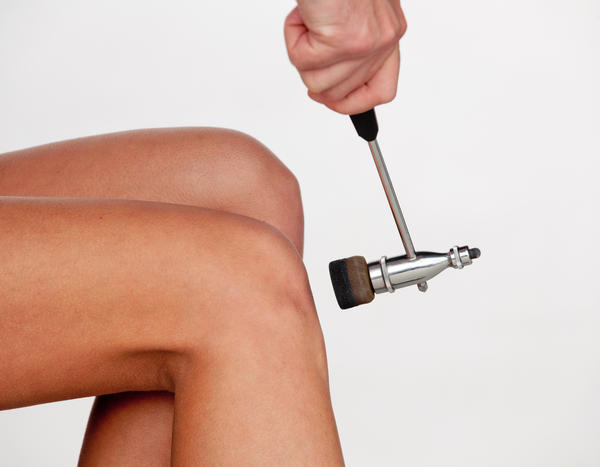
Just a few months ago, I learned that not everybody is subject to this test every time they go to the doctor. I'm still convinced it's pretty common, but for anyone who doesn't know, it's called a reflex test, and it involves a medical professional hitting your joints (usually knees, elbows, and ankles) with a little hammer-like tool to check your reflexes. I fail this one pretty hard, but they persist in doing it every single time. Optimists? Sadists? I'll never know.
On a related note, one test I haven't always failed is the one where they ask me to squeeze their fingers as hard as I can. Especially if it was after the reflex test, I used to have one heck of a grip.
If you kick them, you're good.
Two of the other main symptoms I had as a young child were hip dysplasia and scoliosis. These symptoms are mostly seen in people with "severe" CMT, which is definitely me. Neither of these were discovered by doctors until I was ten, but they were probably there all along.
How that discovery was announced to me:
Doctor, reading my x-ray: Oh my god, look at that spine!
Other doctor: Forget the spine, look at those hips!
Smooth.
Throughout middle school, I had a series of surgeries to put pins and rods in my hips and spine. Plus two extra surgeries to fix mistakes the surgeon made, but that's another story. The end result of those surgeries was that I was going to be in a wheelchair for the rest of my life. That was bound to happen either way, but I reserve the right to be a little bit bitter about how it went down.
Middle school: The BEST time to become dependent on a wheelchair. ;)
In high school, I needed another surgery to help with the deformities in my ankles and feet. It was called a "triple tendon transfer," and it gifted me with flat, rectangular feet, rather than the high arches typical of CMT. I was offered the option of an additional surgery to correct my hammer toes, but I opted out. (Click this link to find out why. Maybe not while eating. Ain't no straight toes worth that, thank you.)
All of those same deformities eventually occur in the hands and arms as the disease progresses. So far, I just have muscle weakness and a barely-noticeable (please don't tell me otherwise) deformity in my wrists. Basically, I can no longer open jars, reliably pick up small objects, or squeeze my doctor's fingers to the point of breaking, and my hands get tired pretty easily when I write by hand. (I can still type just fine, thank goodness.)
He appears to be making more progress with that than I ever could.
Some of the other symptoms I have include tremors; constant burning and tingling nerve pain in my fingers, feet, and legs; lessened ability to detect and adjust to temperature changes; constantly cold feet and hands; dry skin; hair thinning in affected areas (which does not yet mean no shaving my legs, sadly, but I have hope); a lessened sense of touch in my fingertips; foot numbness; difficulty breathing due to a weakened diaphragm; and partial hearing loss.
I have to check my feet and legs often for injuries, because I don't always notice when I'm hurt. Injuries that do occur heal very, very slowly or not at all - I've had a bruise on one of my toes since October, and a bug bite I got on my foot in July seems to be a permanent scar.
Overall, the symptoms of Charcot-Marie-Tooth are a pretty huge part of my life. People tend to frown on saying that an illness defines you, and there are definitely other more important factors in my life, but having this disease has had a major role in shaping who I am. How could it not?
These two awesome videos show the lighter side to living with CMT. Highly recommend.
Everyone who's too scared to ask why I'm in a wheelchair, this is your lucky month. ;)
http://www.cmtausa.org/
I was born with a disease most commonly known as Charcot-Marie-Tooth. Other more descriptive names for it, for you scientific folks, are Hereditary Motor and Sensory Neuropathy and Peroneal Muscular Atrophy.
Most of you have probably never heard of CMT before, but it's one of the most common diseases you've never heard of, affecting an estimated 2.8 million people worldwide, about 1 in every 2,500 people.
Charcot-Marie-Tooth is an inherited disorder, meaning it is not contagious, nor can it be developed late in life. Everyone who has Charcot-Marie-Tooth was born with the disease, although many people don't know it until they're in their late teens to early 30's. The vast majority of people who have CMT inherit it from a parent who either has the disease or is a carrier for the gene that causes it. In rare cases, a child is born with a spontaneous mutation of the CMT gene, despite having no family history of the disorder. These individuals are then able to pass the disorder on to their own children.
Symptoms of Charcot-Marie-Tooth vary greatly based on the "type" of the disorder (the gene mutation) and even between family members who have it, but some of the most common early signs are
Foot weakness and numbness
Foot deformities such as high arches and claw toes
Muscle loss in the lower legs
Balance problems
"Foot drop"
Reduced reflexes
Charcot-Marie-Tooth is a progressive disease, so many people are born with no symptoms at all and develop them later. My parents knew I had it by the time I was a toddler, but I have relatives who haven't experienced any symptoms until their 20s or 30s.
There are currently no treatments to slow down or reverse the progression of the disease. Symptoms can be managed using leg braces, surgeries, physical therapy, and pain medication, but the disorder will continue to progress. There is some research being done into treatments for CMT, and prospective parents who have the disease are able to obtain genetic counseling to learn about their chances of passing it on to their children.
Do you have questions about CMT? I want to answer them.
I haven't used this blog in a long time. I guess I've been getting out all of my desire for blogging (and then some) with the institute blog.
The experiences I've had in the past eight months have been valuable, but many of them were things I didn't feel comfortable posting for the world to see. Now that some time has passed and I've gained a broader perspective, I'm ready to talk about some of those things.
First:
On August 7th - the two year anniversary of my confirmation as a member of The Church of Jesus Christ of Latter-day Saints - my grandmother passed away. I had known for several months that it was coming. She had fallen in her apartment and broken her hip, and the surgeries and recovery process weakened her to a state where she was in constant pain and confined to a hospital bed.
Losing my grandmother, who was one of the greatest role models, was a painful loss, but I've been able to take comfort in understanding the Plan of Salvation. I know that my grandmother lived a full life and that she'll forever be remembered by everyone who knew her. She wasn't the kind of person who can easily be forgotten.
She lived a life full of trials, including childhood poverty, the death of her first child, and a painful lifelong disability, but she was a woman who was full of joy. She never tried to fit in or mold herself to anyone else's expectations, and she taught me to love myself in the same way. I wouldn't be the person I am today if I hadn't known her, and I know that I'll have the opportunity to be with her for eternity. I've been to the temple nearly every month since just before she died, and it's given me a great sense of peace.
Second:
Ever since I was baptized, I've wanted to serve a mission. I always knew that it was unlikely that I would be permitted to serve, but for over two years, I felt the desire to do so pull on my heart. It was on my mind almost every day, others told me I should consider it, and I honestly felt like it was what God wanted me to do. After fighting it for years, I finally approached my bishop in September and hesitantly asked if it would be possible. To my shock, the answer was "yes."
Wait... yes!?
That wasn't the answer I was expecting, but both my bishop and my stake president confirmed that, even with my disability, I could serve a full-time mission. I prayed and considered my options for about a week, and decided I would go. I knew there would be challenges, but it was what God wanted and what I wanted, so I threw myself into preparing to serve.
Then, just as I was about ready to go, the answer I and everyone else was getting from Heavenly Father changed. After months of promptings to go serve a mission, I suddenly got a big fat "STOP!" It surprised me, but I knew that serving a mission really wasn't what God would have me do.
I was saddened because I had a desire to serve and I thought I could contribute (both to the people I would meet and to the Church's perception of people with disabilities), but more than anything, I was confused about why I and so many others had felt led down one path only to then find out it was wrong. Overcoming that experience took time. I never lost my trust in God, but I lost my trust in myself. I thought that I must have acted on something other than a prompting of the Holy Ghost, but I couldn't distinguish between the prompting to serve a mission and any other personal revelation I had received.
To explain how I got past that, I'm simply going to share a Mormon Message with you.
So, all of this brings us through August, September, October, and the beginning of November.
Third:
Throughout all of this, a close friend of mine had been gradually wandering down a dangerous path. He didn't do anything morally wrong, but he developed an acute mental illness that culminated in a life-threatening situation. I won't go into much detail about it, because it isn't my story to tell, but it had a significant impact on me. Beginning in November, I recognized that what I had thought was just an odd pattern of behavior was, in reality, very serious.
For over a month, I dedicated nearly all of my time that wasn't spent in a classroom to caring for my friend. During that time, I felt a closer relationship with the Savior than I ever have at any other time. I received multiple priesthood blessings assuring me that I was doing the right thing, and I felt the love that God has for my friend being poured out through me. I have no regrets whatsoever and would do it all again with no hesitation if my friend needed it, but I sacrificed my own self-care in favor of caring for another person.
Given my own physical weakness, there was a significant price to pay for making that sacrifice. For nearly three months after my friend no longer needed my help, my body insisted that I catch up on its basic needs, particularly sleep. Six weeks of sleeping for two to three hours a night was traded in for two months of sleeping for twelve to sixteen hours a day. Only now, after three months, do I feel like my body has completely recovered, but I've never doubted for a moment that it was worth it.
I certainly wasn't a perfect friend, and there were many days when I probably made my friend's burden heavier instead of lighter, but I've learned so much about myself, about Christ, and about our loving Heavenly Father. I would have preferred to have learned those lessons without someone I love suffering so greatly. Nonetheless, I'm grateful to have had the experience of being there for my friend during that time. (He's been there for me through some pretty tough trials, too.)
Where Am I Now?
Right now, I'm trying to gain a sense of direction and figure out exactly what it is that God would have me do. School this semester has been hard... really hard. I'm already at a physical disadvantage, and the choices I made last semester (although awesome) have made it even harder. I'm looking for a job so I can feel productive and earn some money over the summer, but I haven't had any luck at finding a part-time job I'm capable of doing without a degree. For now, my life mostly consists of fulfilling my church callings (ward missionary and institute president) and building friendships with some fantastic people. I've been focusing on the temple (a friend and I have gone to the baptistry at the DC temple every month) and on developing my relationship with Heavenly Father through prayer. I've grown up a whole lot in both temporal and spiritual maturity, and I feel a great hope for the future, both in this mortal life and beyond.
Full disclosure: I wrote the first two sentences of this post in early November, and I'm finally posting it in March.
I had been in Morgantown for almost two weeks when it happened.
I was wandering around campus in between my classes, searching for the well-hidden access ramps to buildings I hadn't yet explored, when someone I'd met at church the previous week shouted my name and ran across the street to join me.
In the hour that followed, he became my first friend in my new home. We talked about Kim Possible, life on a farm vs. life in a city, and what it meant to be a Mormon at a party school. Our conversation was hilariously awkward, just like any first conversation should be, and shortly before we parted ways, he asked "the question."
For years, I dreaded "the question." I resented my disability, and talking about what happened to me was the last thing I ever wanted to do.
In the months after my baptism and before I moved to Morgantown, as my life was turned upside down and I learned more than I'd ever wanted to know about myself, I had come to accept my disability and to feel at peace with its cause. But I hadn't had to talk about it -- everyone in my small town already knew, and the handful of people I'd met hadn't been interested in the details.
My initial response to "the question" that day... well, it wasn't so great. I said something like "It's called Charcot-Marie-Tooth and it's kind of like muscular dystrophy but not really... and there's nothing wrong with my teeth."
My new friend chuckled somewhat nervously at the tooth comment and asked if I'd always been in a wheelchair. "No, I could walk until I was eleven. I had to have surgery and the doctor screwed up and I couldn't walk anymore after that."
He hesitated for a moment before making his next comment: "So after that you still converted? I don't know if I would have been able to do that."
Long pause. "Well... I decided eight years of bitterness was enough for me."
"Really? I think I would have gone for at least twelve."
And just like that, talking about it became okay. The spell of silence about my disability was broken. I was damaged, I was healing, and it was okay to laugh.
The word "cripple" entered my everyday vocabulary, and it felt right. The sassy t-shirt that screams "hey, my legs don't work and I can laugh about it so you can too" was pulled out of the closet.
Eventually, the friend who had so awkwardly asked "the question" that first time began calling me Wheels (it could have at least been more original, for crying out loud) and making cripple jokes of his own, and every time I hear one I'm reminded of that pivotal moment.